
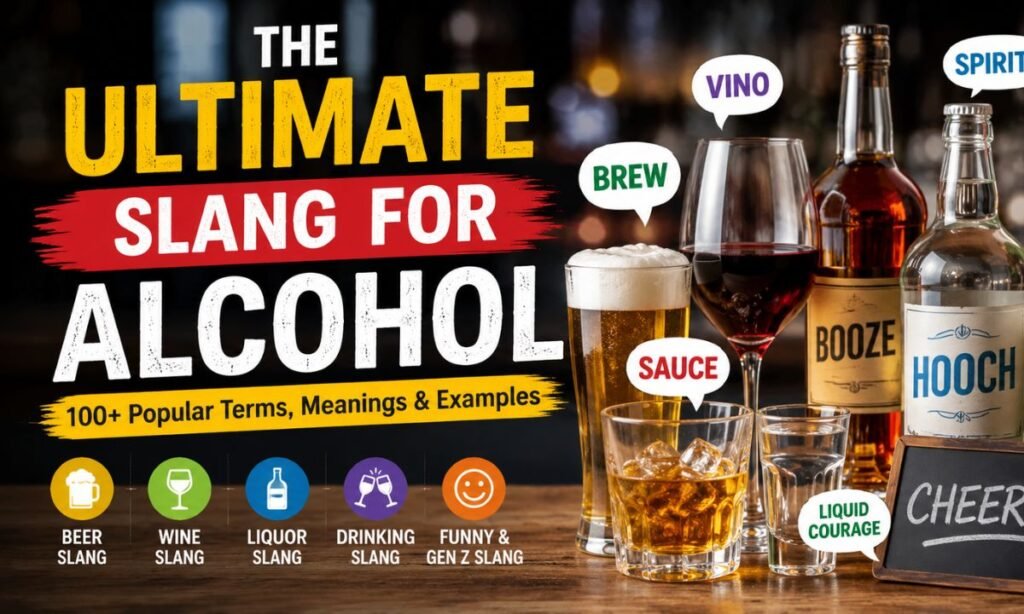
Ask five people what they call a drink and you might get five different answers. Booze, sauce, hooch, and juice all point to the same thing, yet each carries its own tone, generation, and setting.
This guide breaks down the most common slang for alcohol used across the United States today, from old-school bar talk to the newest terms trending on social media, so you always know the right word for the right moment.
Why People Use Slang for Alcohol Instead of Plain Words
Slang exists because plain language often feels too formal for a casual moment. Saying “grab a cold one” feels friendlier at a barbecue than saying “please hand me a beer.” Slang also lets speakers signal age, region, or social group. A bartender saying “top-shelf” communicates quality instantly, while a teenager texting “sauce” signals a completely different audience.
Language researchers note that drinking slang tends to cluster around three needs: describing the drink itself, describing the act of drinking, and describing the resulting state of intoxication. Understanding which bucket a word falls into makes it much easier to use slang correctly instead of guessing.
The Most Common Slang Terms for Alcohol
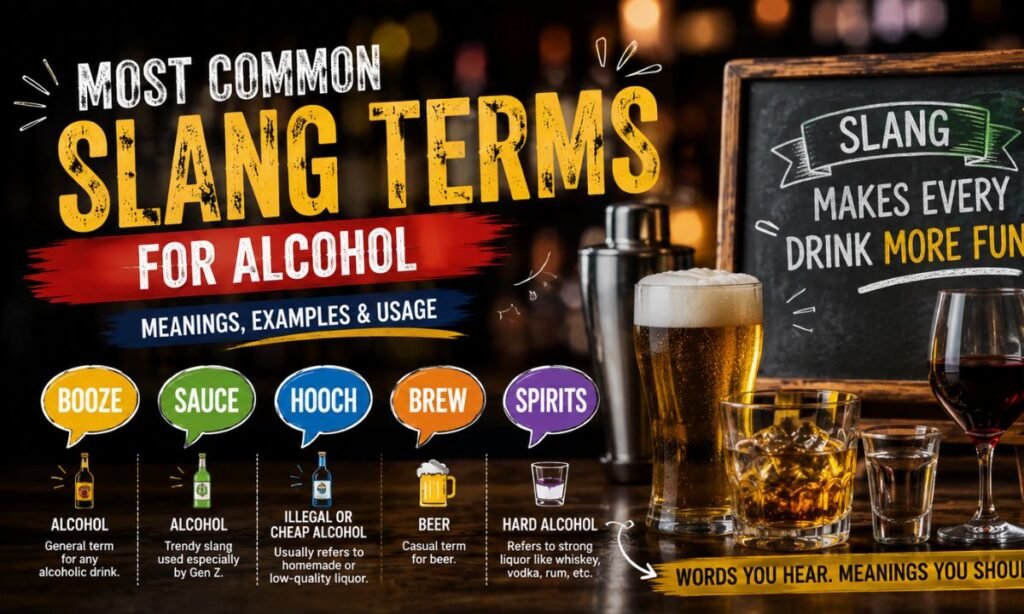
These are the words you’ll hear most often in everyday American conversation, regardless of age or region.
- Booze the single most recognizable general term for alcohol in the U.S.
- Sauce casual, often used by younger speakers (“out here on the sauce”)
- Hooch informal, sometimes implies homemade or lower-quality liquor
- Spirits a more formal or retail term for distilled alcohol
- Liquor standard term for distilled drinks like whiskey, vodka, and rum
- Brew almost always refers to beer
- Grog an old nautical term now used playfully
- Firewater vintage slang implying a strong, harsh drink
- Juice informal, often used by younger crowds
- Adult beverage a lightly humorous, workplace-safe way to say alcohol
- Liquid courage alcohol consumed to reduce nerves before an event
- Nightcap a final drink before bed
Quick Meaning Table
| Slang Term | Standard Meaning | Typical Tone |
| Booze | Alcohol in general | Casual |
| Hooch | Alcohol, often homemade | Informal |
| Sauce | Alcohol | Playful |
| Spirits | Distilled alcohol | Formal |
| Brew | Beer | Casual |
| Vino | Wine | Casual |
| Firewater | Strong liquor | Vintage/playful |
| Top-shelf | Premium liquor | Bar setting |
Beer, Wine, and Liquor: Slang Sorted by Drink Type
Different drinks attract different nicknames, and mixing them up can sound off to a native speaker.
Beer slang leans casual and social: cold one, suds, brewski, barley pop, six-pack, and draft are all common at parties, sports bars, and backyard cookouts.
Wine slang tends to be lighter and sometimes self-deprecating: vino for wine in general, bubbly for champagne or sparkling wine, and plonk for cheap, low-quality wine.
Liquor and hard-alcohol slang often references strength or origin: moonshine and white lightning for homemade spirits, well liquor for the cheapest bar pour, and top-shelf or call brand for premium bottles.
Funny and Playful Names for Alcohol
Some slang exists purely for humor rather than convenience. These terms show up in group chats, party invites, and casual banter more than in formal writing.
- Giggle juice
- Party fuel
- Happy juice
- Rocket fuel
- Devil’s brew
- Liquid gold
- Medicine (used ironically)
- Poison (used ironically, not literally)
Slang for Drinking, Being Drunk, and the Morning After
These terms describe the action and the aftermath rather than the drink itself, and they shift the most between generations.
Slang for drinking: grab a drink, have a few, throw one back, raise a glass, pregame, get your drink on.
Slang for being drunk: tipsy and buzzed describe a light effect, while sloshed, hammered, plastered, smashed, and wasted describe heavier intoxication. Newer, internet-driven terms like turnt, lit, faded, and zooted have become common among younger speakers, often used more loosely to describe general excitement, not just alcohol.
Slang for hangovers: hair of the dog (drinking again to ease a hangover), hangxiety (post-drinking anxiety), and rough morning are the terms most people recognize immediately.
Generational Comparison Table
| Generation | Typical Terms Used | Example Phrase |
| Older Generations | Firewater, hooch, spirits | “Pour me some of that firewater.” |
| Millennials | Cold one, liquid courage, nightcap | “One nightcap and I’m done.” |
| Gen Z | Sauce, giggle juice, lit, turnt | “The party got lit fast.” |
Regional Drinking Lingo Across the United States
Slang for alcohol isn’t uniform across the country. In the South, “hooch” and “shine” carry stronger associations with homemade whiskey and rural tradition. In coastal cities, craft-beer culture has popularized terms like “hazy,” “session beer,” and “growler.” College towns tend to favor party-driven slang like “jungle juice” or “party punch,”
while working-class bar culture in the Midwest and Northeast still leans on straightforward terms like “brew” and “shot.” Recognizing these regional patterns helps explain why the same word can sound completely natural in one state and slightly out of place in another.
How Alcohol Slang Reflects American History and Culture
Much of today’s alcohol slang has deep historical roots. “Moonshine” and “bootleg” trace directly back to Prohibition, when illegal liquor was distilled in secret and smuggled across state lines. “Speakeasy” described the hidden bars of that era, and “bathtub gin” referred to crudely homemade spirits.
Even “firewater,” often linked to old trade-era slang, reflects how language around alcohol has always carried a mix of danger, humor, and secrecy. Modern slang, from “top-shelf” to “sauce,” continues this pattern of language adapting to social attitudes, marketing, and generational identity.
Bartender and Industry Slang You Won’t Find in a Dictionary
Behind the bar, professionals use their own shorthand that rarely appears in everyday conversation. A “well drink” refers to a standard mixed drink made with house liquor, while a “call” or “call brand” means the customer requested a specific label.
“In the weeds” describes a bartender overwhelmed with orders, and a “back” refers to a small chaser served alongside a shot. Knowing a few of these terms can make ordering at a busy bar smoother and signals familiarity with bar culture.
How Music, Movies, and Social Media Shape Drinking Vocabulary
Pop culture has always accelerated how drinking slang spreads. Hip-hop and country music popularized terms like “sippin'” and “jug,” while sitcoms and movies helped normalize phrases like “liquid courage” and “one for the road.” Today, platforms like TikTok move even faster: a single viral clip can turn a niche phrase into nationwide slang within weeks.
This is largely why Gen Z slang for alcohol, such as “sauce” or “lit,” changes more quickly than the vocabulary used by older generations, which tends to stay stable for decades.
Related Post: Slang for Looking Good: The Complete Modern Guide to Complimenting Style and Appearance
Slang Etiquette: When It Helps and When It Hurts
Slang works best when it matches the setting. Using “cold one” or “brew” among friends at a cookout feels natural, but the same words can feel unprofessional in a workplace happy hour or client dinner, where “adult beverage” or simply naming the drink is safer. Overusing very new slang, especially terms borrowed from teen culture, can also come across as forced if used by someone outside that age group.
The safest approach is to match the formality and generation of the people you’re speaking with, rather than defaulting to whatever term feels trendiest.
US vs UK Alcohol Slang
American and British English differ in a few key ways when it comes to drinking vocabulary.
- Americans say liquor; the British more often say spirits.
- Americans go to a bar; the British go to a pub.
- Americans buy from a liquor store; the British use an off-license.
- Americans say pregame; the British say pre-drinks or pre-lash.
- Americans say buzzed; the British more commonly say tipsy or merry.
Frequently Asked Questions
What is the most common slang word for alcohol?
Booze is the most widely recognized and used slang term for alcohol across the United States.
What are five slang words for alcohol?
Booze, sauce, hooch, spirits, and liquor are five of the most commonly used terms.
What is a funny name for alcohol?
Giggle juice and rocket fuel are popular playful nicknames used mostly in casual settings.
What is American slang for alcohol?
Booze, sauce, and liquid courage are especially common in everyday American conversation.
What is slang for drinking alcohol?
Common phrases include grab a drink, throw one back, and pregame before an event.
What is slang for cheap alcohol?
Rotgut, swill, well liquor, and bum wine all describe low-quality or inexpensive alcohol.
What is Gen Z slang for alcohol?
Sauce, giggle juice, and party fuel are frequently used by younger speakers online and in person.
Conclusion
Slang for alcohol changes with generation, region, and setting, but a handful of terms like booze, sauce, and hooch stay recognizable across almost every group. Knowing the difference between casual party slang and more formal alternatives helps you sound natural wherever you’re drinking, whether that’s a backyard cookout, a bar with friends, or a group chat planning the next get-together.
