

What it really means is the intended message behind a phrase, not just its dictionary definition. Two people can say the same words and mean very different things, which is why context, tone, and relationship matter so much.
This guide explains the true meaning of everyday phrases, shows how hidden meaning appears in text, and gives practical steps to understand the meaning behind the words. You will also find real examples, two handy tables, and short answers to common questions, so you can read any message with more confidence and less guesswork.
What Does “What It Really Means” Mean?
The phrase points to the real meaning under the surface. People use it when a statement feels unclear, mixed, or emotionally loaded.
The Simple Meaning in Plain English
It asks, “What is the person truly trying to say?” The answer often sits in the intent, not the exact words.
What “Really” Adds
The word “really” signals a gap. It suggests the obvious reading may not be the full story.
What It Really Means vs. What It Seems to Mean
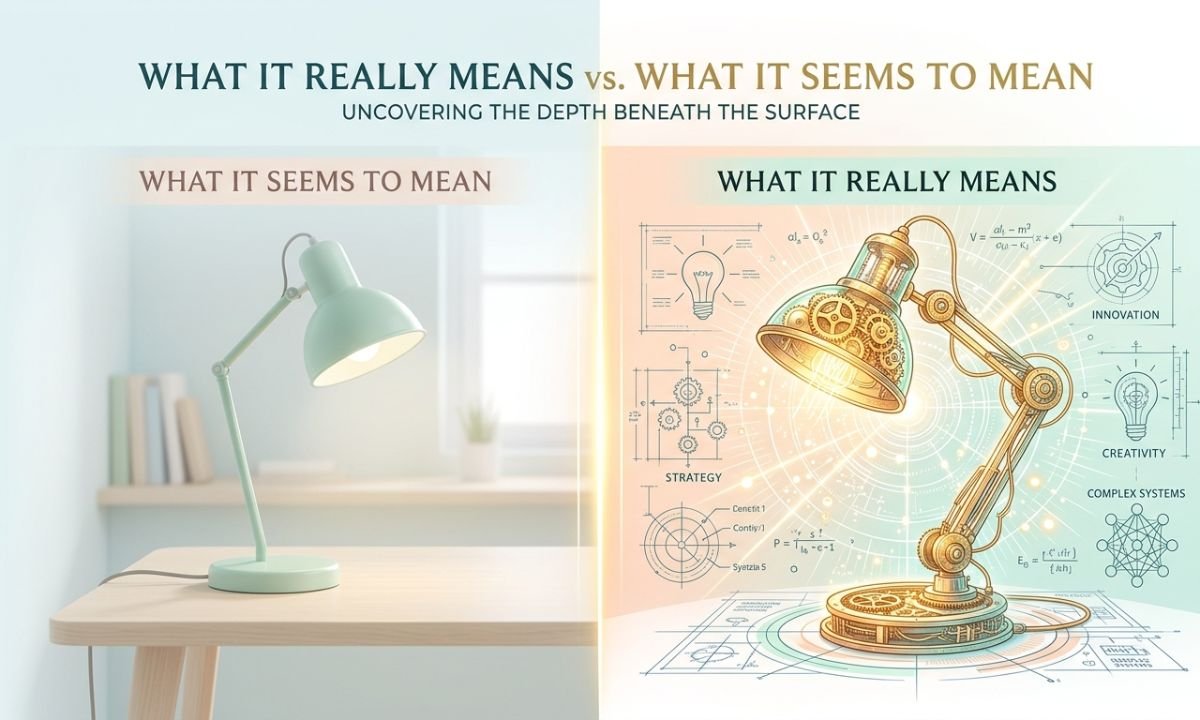
A literal meaning is what the words say. An intended meaning is what the speaker wants you to understand.
• “I’m fine” can literally mean all is well, yet intend “I am upset.”
• The first interpretation can be wrong because we fill gaps with our own mood.
• Context changes meaning through the setting, the speaker, and recent events.
What Does It Really Mean in Text Messages?
Text strips away voice, face, and body language. That leaves short words open to many readings.
Tone, punctuation, and emojis shape meaning heavily. A period after “okay” can feel cold, while “okay!” feels warm. A delayed reply can also change how a message lands, even when the words stay identical.
Signs a Message Has a Hidden Meaning
Look for these clues in meaning and context:
• A sudden drop in length or warmth
• Missing punctuation or extra punctuation
• Vague answers to direct questions
• Topic changes right after a sensitive point
How to Find the Real Meaning Behind Someone’s Words
Follow these steps in order:
1. Read the words before and after the message.
2. Consider who said it and how they usually talk.
3. Notice tone, timing, and the situation.
4. Pause before assuming the worst.
What It Really Means in Different Situations
The same phrase shifts with the setting.
• Everyday conversations: Tone of voice usually settles the meaning quickly.
• Texting and online chats: Reply speed and style carry extra signals.
• Social media: Public posts often hint instead of stating.
• Work messages: Polite wording can hide urgency or disagreement.
• Dating and relationships: Short replies may show stress, shyness, or mixed feelings.
Why People Say One Thing but Mean Another
People rarely lie here. They usually protect feelings or avoid conflict.
• Indirect communication: Some cultures and families value hints over blunt speech.
• Sarcasm and humor: The words say one thing, and the tone says the opposite.
• Hidden emotion: Sadness or anger may leak out through short replies.
• Polite or avoidant language: “We will see” often softens a no.
10 Examples of “What It Really Means”
| Phrase | Common Hidden Meaning | Best Clue |
| Okay | Accepting, or quietly unhappy | Punctuation and tone |
| Sure | Agreement, or reluctance | Speed of reply |
| Fine | Calm, or upset | Length of message |
| Interesting | Curious, or unimpressed | Follow up questions |
| Maybe | Leaning no | Lack of details |
| We’ll See | Polite refusal | No date given |
| I’m Busy | Real schedule, or low interest | Offer of another time |
| No Problem | Truly fine, or mild annoyance | Warmth of wording |
| Whatever | Frustration or giving up | Emotional context |
| I’m Good | Satisfied, or declining | Situation |
Quick Cheat Sheet for Reading Context
| Context Factor | What to Check | Why It Helps |
| Speaker | Usual style and habits | Shows what is normal for them |
| Timing | Recent events or arguments | Explains mood shifts |
| Channel | Text, call, or social post | Changes how strict the wording is |
| Relationship | Friend, boss, partner | Sets the level of honesty |
What It Really Means on Social Media
Online slang moves fast. A word can carry a dictionary meaning and a completely different platform meaning.
Slang changes meaning online because communities reshape words for jokes and identity. TikTok, Instagram, and Snapchat each have their own habits, so a phrase may sound playful on one app and rude on another. Viral phrases also gain several meanings at once, and only the surrounding comments reveal which one applies.
Common Mistakes People Make When Interpreting Meaning
• Taking every message literally
• Ignoring the earlier conversation
• Judging tone from words alone
• Overthinking a very short reply
How to Know What Someone Actually Means
• Ask for clarification: A calm question ends most confusion.
• Check the conversation history: Patterns beat single messages.
• Compare words with actions: Behavior often tells the truth.
• Avoid assuming: Wait for enough information before reacting.
Tips to Reply Without Starting a Conflict
Use gentle openers such as “Just checking I understood you.” Describe your own feeling instead of accusing. Keep the reply short and give the other person room to explain.
What Is the Difference Between “Really Means” and “Actually Means”?
“Really means” stresses the hidden or true layer. “Actually means” corrects a wrong belief. “Truly means” sounds more emotional or formal. In daily speech, “really” and “actually” feel the most natural, and both work in casual writing.
Why Meaning Matters in Communication
Misreading meaning causes needless arguments, weak teamwork, and hurt feelings. Clear interpretation builds trust, saves time, and helps you respond with empathy instead of guesses.
Frequently Asked Questions
What does “what it really means” mean?
It refers to the true intended message behind words. It looks past the surface definition.
What does “what does it really mean?” mean?
It is a question asking for the deeper or hidden explanation. People use it when something feels unclear.
What is another way to say “what it really means”?
You can say true meaning, actual meaning, or hidden meaning. All of them fit most contexts.
What is the difference between literal and intended meaning?
Literal meaning is what the words say. Intended meaning is what the speaker wants you to understand.
How can context change the meaning of a message?
Setting, speaker, and timing add clues. The same words can sound kind, rude, or funny.
How do you understand hidden meaning in text?
Check tone, punctuation, timing, and past messages. When unsure, ask directly.
How do you ask someone what they really mean?
Try a calm line like “Can you explain what you meant?” Keep your tone friendly and curious.
Conclusion
What it really means is the intended message behind the words, shaped by context, tone, and relationship. Read the situation first, look for clues, compare words with actions, and ask when unsure. That simple habit turns confusing messages into clear communication.
