

YK shows up constantly in texts, comments, and group chats, and most of the time it simply stands for “you know.” People add it to statements to sound more casual, check that the other person follows along, or soften a comment without needing a full sentence.
The tricky part is that YK is not always a straightforward filler. Its placement in a sentence, the platform it appears on, and even the situation can shift what it actually communicates. This guide covers the core meaning, real text examples, and natural ways to reply when someone sends it to you.
What Does YK Mean in Text?
YK is a texting abbreviation for “you know.” It is used to make a message feel conversational, check for shared understanding, or gently invite agreement without asking a direct question.
- Most common meaning: you know
- Common placement: end of a sentence, as a soft check in
- Typical users: casual texters across age groups, especially in informal chats
What Does YK Mean in a Text Message?
Where YK sits in a sentence changes how it reads.
- At the beginning: often introduces a shared fact, as in “YK I was just being honest.”
- In the middle: adds emphasis to the point being made, almost like a verbal nudge.
- At the end: usually seeks quiet agreement, functioning like a rhetorical question.
- As “you know what I mean”: a slightly longer version used when the sender wants clear confirmation.
Why Do People Use YK in Texting?
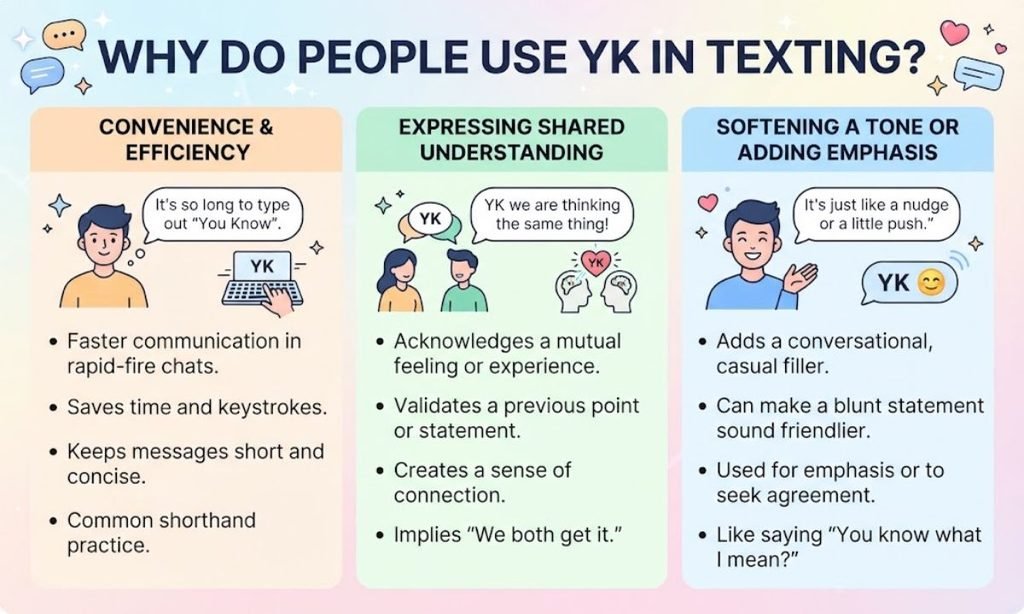
YK serves several small but useful functions in everyday conversation.
- Makes a message sound more casual and less formal
- Assumes shared understanding between both people
- Invites agreement without directly asking for it
- Softens a statement so it feels less blunt
- Keeps fast paced conversations short and natural
YK Meaning Changes With the Context
The two letters stay fixed, but the sentence around them decides the real meaning.
- Shared understanding: “We both know how that goes, yk.”
- Seeking agreement: “That was so unnecessary, yk?”
- Explaining a feeling: “I just felt off today, yk.”
- Conversational filler: used the way “like” or “um” appears in spoken speech.
- Wanting the listener to relate: implies the sender expects the other person to connect emotionally.
What Does YK Mean at the End of a Text?
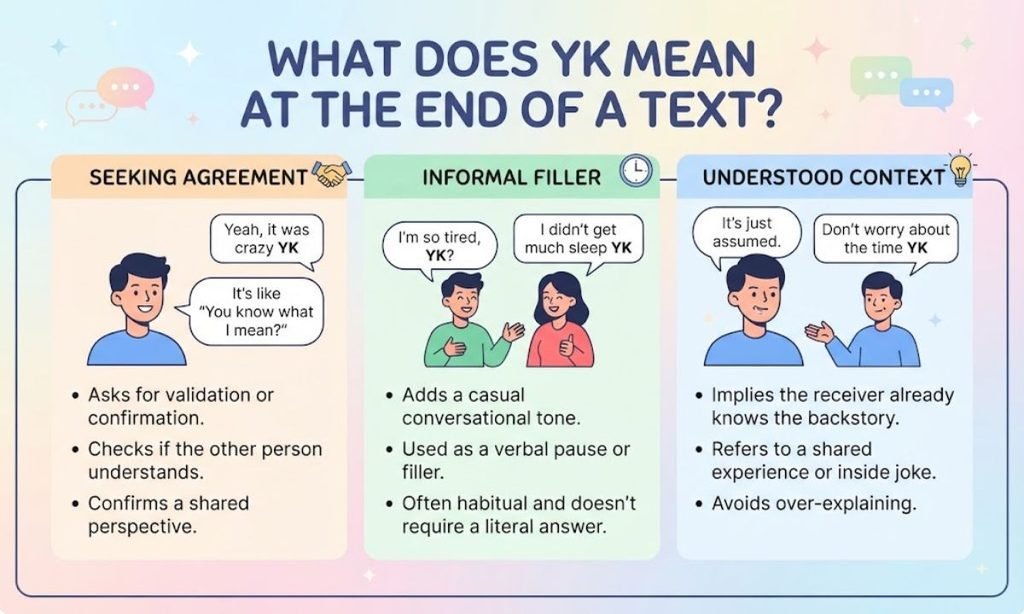
When YK lands at the end of a sentence, it typically functions as a soft, rhetorical check in rather than a real question.
- “It was weird, yk?” means the sender assumes the listener felt the same way.
- “I needed a break, yk” signals the sender expects understanding without further explanation.
- “You look good, yk” adds a casual, complimentary tone rather than seeking a literal answer.
- In most cases, ending a message with YK invites a nod of agreement, not a detailed reply.
YK Text Examples You Can Actually Use
Example 1: “That movie was actually really good, yk?” Meaning: The sender believes the listener will agree without needing more explanation.
Example 2: “YK I was just trying to help.” Meaning: The sender wants the listener to already understand their intention.
Example 3: “I’m just tired of all this, yk.” Meaning: The sender is expressing a feeling and expects empathy rather than a solution.
Is YK Rude or Friendly?
YK is neutral by default and mainly reflects the tone of the surrounding message rather than being rude on its own.
- Friendly tone: often paired with compliments or shared jokes
- Casual tone: common in relaxed, everyday chat between friends
- Dismissive tone: possible when used curtly during a disagreement
- Emoji influence: a laughing or smiling emoji softens it, while a flat one word reply can feel distant
What Does YK Mean on Snapchat, TikTok, Instagram, and WhatsApp?
| Platform | Common Use of YK |
| Snapchat | Quick, casual addition to a snap caption or chat reply |
| TikTok | Used in comments to imply shared opinion about a video |
| Common in DMs to soften a statement or seek agreement | |
| Used in group chats to check if others relate to a point |
Does YK Have Any Other Meanings?
While “you know” is the overwhelming default, YK occasionally appears with a different meaning depending on the sentence.
- Primary meaning: you know, used constantly across casual texting
- Alternate meaning: in reaction to surprising news, some people use YK loosely to mean “you’re kidding”
- Why the sentence matters: a wild or unexpected statement before YK often points to the second meaning
- How to identify intent: check whether the line before it sounds like shared knowledge or a shocking claim
YK vs Similar Texting Abbreviations
- YK vs IDK: IDK means “I don’t know,” the opposite intent of assumed shared knowledge
- YK vs IYKYK: IYKYK (“if you know, you know”) implies an inside reference, while YK is more general
- YK vs YKW: YKW (“you know what”) often introduces a new statement rather than closing one
- YK vs “you know”: identical meaning, YK is simply the shortened, faster version for typing
How to Reply When Someone Says YK
| If Someone Texts | Natural Reply |
| “You know what I mean, yk?” | “Yeah, I get you.” |
| “That place was amazing, yk?” | “Definitely!” |
| “YK I was joking.” | “Haha, I know.” |
| “I just needed some space, yk.” | “Yeah, I understand.” |
How to Use YK Naturally in Your Own Texts
- Use it in casual conversations where a relaxed tone fits
- Add it when the other person already shares the context
- Avoid it when precise clarity matters more than tone
- Skip slang entirely in messages meant to sound formal or official
Is YK Appropriate for Work or Professional Messages?
YK is informal and generally out of place in business emails, client communication, or official documents, even though it feels natural in personal chats.
Better alternatives for professional writing include:
- “As you know”
- “You may already know”
- “As we discussed”
- “I believe you understand what I mean”
The Origin and Growth of YK as Texting Slang
YK grew out of the same fast typing culture that produced terms like IDK and TBH, shaped by small mobile keyboards and character limits in early SMS messaging. As texting shifted into apps like WhatsApp, Snapchat, and Instagram, YK carried over naturally because it matched the casual, conversational rhythm those platforms encourage.
How Age Groups Use YK Differently
Younger texters use YK frequently and almost automatically, often without thinking about its filler function. Older or less frequent texters may read the same line as unclear or overly casual, since they are more used to complete sentences. This gap is a common reason YK gets misread in mixed age group chats, such as family threads or workplace messaging.
Common Mistakes People Make With YK
- Assuming it always seeks a literal yes or no answer
- Ignoring the sentence before it, which usually reveals the intended meaning
- Treating YK and IYKYK as interchangeable, when they serve different purposes
- Using it in a formal message where clarity is more important than tone
How Emojis and Tone Change the Meaning of YK
A laughing emoji or a heart after YK softens the message and signals warmth or humor. A blunt, punctuation heavy version, like “YK.” with no other context, can feel closed off or short. Without extra punctuation, YK generally reads as relaxed and conversational, matching the tone of the rest of the message.
YK Meaning Quick Reference
| Text | Meaning | Typical Use |
| YK | You know | Casual |
| YK? | You know? | Seeking agreement |
| YK what I mean? | You know what I mean? | Checking understanding |
| YK how it is | You know how it is | Shared understanding |
| YK lol | You know | Playful, casual |
Frequently Asked Questions
What does YK mean in text?
YK usually means “you know,” used to sound casual or check for shared understanding.
What does YK stand for?
It stands for the phrase “you know,” shortened for faster typing.
Is YK short for “you know”?
Yes, in nearly all texting contexts, YK is simply an abbreviated form of “you know.”
Is YK slang?
Yes, it is informal texting slang common in casual chats and social media.
Is YK rude in texting?
Not by default, tone depends on the surrounding message rather than the abbreviation itself.
What does YK mean at the end of a sentence?
At the end, YK usually seeks quiet agreement, similar to a rhetorical question.
How do you reply to YK?
A short, agreeing reply like “yeah, I get you” usually matches the casual tone.
Conclusion
YK most commonly means “you know” in texting, chats, and social media. People use it to sound casual, express shared understanding, seek agreement, or soften a statement. In rare cases it can suggest disbelief, so the sentence surrounding it remains the clearest guide to its actual meaning.
